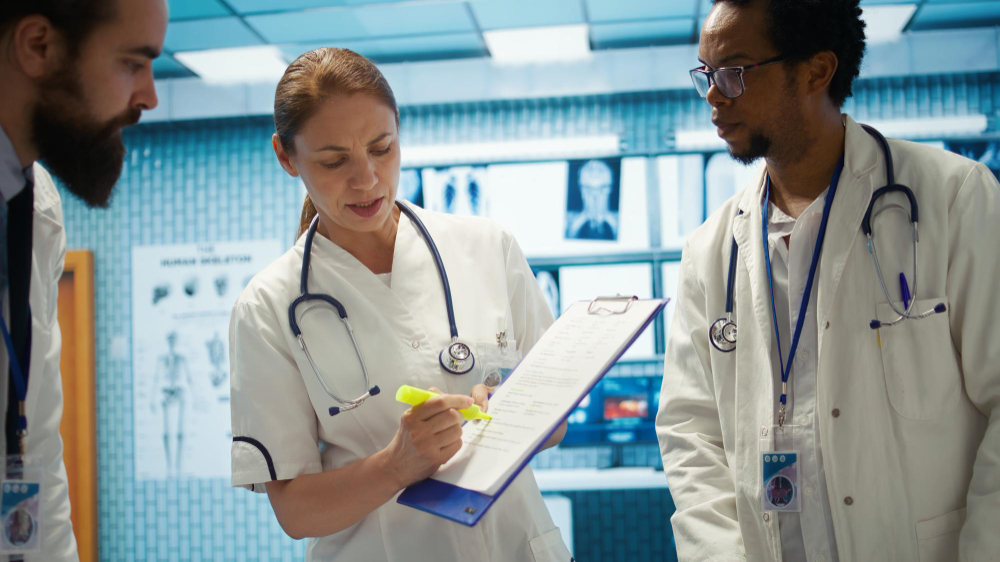
In today’s rapidly evolving healthcare landscape, the making of a great physician extends far beyond textbooks and lecture halls. International training has emerged as a powerful force in shaping well-rounded, highly competent doctors by exposing them to diverse clinical environments, advanced technologies, and a wide range of patient populations. This global approach to medical education not only enhances clinical expertise but also fosters adaptability, cultural awareness, and innovation.
Practicing in a foreign healthcare system challenges physicians to step outside their comfort zones, navigate unfamiliar protocols, and communicate with patients from different cultural and linguistic backgrounds. This experience builds resilience, flexibility, and empathy, helping physicians to deliver patient-centered care in an increasingly globalized world. A culturally competent physician is better equipped to understand patient needs, build trust, and provide more effective treatment.
At Windsor University School of Medicine (WUSOM), this philosophy is not incidental to our curriculum; it is central to it. Let’s explore in detail how international training shapes better doctors and why WUSOM continues to be the destination of choice for physicians committed to global excellence.
Medicine Without Boundaries: A Mentality Shift
Medicine has always been a discipline defined by its pursuit of knowledge, and increasingly, that pursuit is crossing borders. Medical professionals are expanding internationally to access advanced equipment, diverse patient populations, and world-class mentorship. International training offers MD graduates the opportunity to pursue short-term simulation fellowships, immersive, hands-on clinical rotations, and long-term specialization programs. This cross-border training consistently develops more skilled, adaptable physicians and contributes to stronger, more resilient healthcare systems.
International medical training has transformed from a niche aspiration into a career-defining imperative. From the U.S. to the UK, from Nigeria to the Caribbean, doctors who step outside their home systems return not just with sharper skills but with a fundamentally different way of thinking about medicine, patients, and themselves.
Six Ways International Training Shapes Better Doctors
1. Diverse Clinical Exposure Sharpens Diagnostic Capability
One of the most powerful gifts international training offers is clinical diversity. Patient demographics, disease prevalence, and presentation patterns vary dramatically across geographies. A physician trained exclusively in a high-income urban setting may rarely encounter advanced tuberculosis, tropical parasitic infections, or malnutrition-related presentations. However, a physician who trains across continents encounters all of these and more.
This breadth is not merely academic. Physicians exposed to a broader spectrum of conditions develop heightened clinical intuition. They think faster, consider a wider range of differential diagnoses, and make fewer anchoring errors. Several studies suggest that international clinical exposure significantly enhances diagnostic accuracy, particularly for conditions with overlapping or similar symptom profiles.
2. Access to Advanced Technologies and Cutting-Edge Methods
Technology adoption in medicine is uneven worldwide. What is experimental in one country is the standard of care in another. Doctors who train internationally gain access to AI-driven diagnostic platforms, robotic-assisted surgical systems, simulation-based intervention training, and advanced imaging modalities long before these tools become available in their home institutions.
This exposure is not passive observation. International training programs embed physicians in environments where they use these technologies hands-on, under expert supervision, in authentic clinical scenarios. The result is a practitioner who is not intimidated by new tools but one who knows intuitively how to integrate them into patient care.
Internationally trained physicians bring these capabilities home. They become internal champions for adoption, trainers for their colleagues, and architects of upgraded departmental protocols. In this way, a single physician’s international fellowship can catalyze system-wide advancement.
3. Adaptability and Cultural Competence
Navigating an unfamiliar healthcare system is an education in itself. The administrative structures, documentation requirements, patient communication norms, and interdisciplinary dynamics differ meaningfully across countries. Physicians who learn to operate effectively within these varied systems develop a rare and invaluable professional elasticity.
Cultural competence is the ability to understand, respect, and adapt to diverse cultural norms in a clinical context has moved from a soft skill to a core clinical requirement. A study shows that cross-cultural clinical exposure directly enhances empathy, communication effectiveness, and patient trust. Patients who feel seen and understood are more adherent to treatment plans, more forthcoming in history-taking, and more likely to experience positive outcomes.
Physicians who have lived and worked abroad bring this cultural intelligence into every patient encounter throughout their careers. They are more attuned to social determinants of health, more alert to implicit bias in clinical decision-making, and more capable of building therapeutic relationships across differences.
4. Global Mentorship and Professional Network Development
The mentorship dimension of international training is frequently underestimated. When you train abroad, you are not simply acquiring skills; you are entering a global community of practitioners. The late-night case discussions, the cross-disciplinary collaborations, and the faculty relationships that extend beyond the training room, all these connections reshape a physician’s professional identity and trajectory.
International mentors bring diverse clinical philosophies, research priorities, and problem-solving approaches. Exposure to this diversity of thought challenges assumptions and accelerates professional growth in ways that a single-system career path rarely affords.
For the individual physician, this global network is a career-long asset. It opens doors to international research opportunities, visiting faculty invitations, co-authored publications, and leadership roles in global health organizations. In a field that is increasingly collaborative and borderless, your network is not incidental to your career; it is foundational to it.
5. Technical Proficiency and Best Practices from Global Leaders
Every country and every institution excels in something. Physicians who train internationally do not simply absorb one country’s best practices; they cherry-pick the best of many systems. They compare techniques, evaluate protocols against different patient populations, and return home with a synthesized, battle-tested approach to clinical practice that no single-country education can replicate.
The evidence supports this. Research suggests that international clinical experience is associated with a 20–30% improvement in technical proficiency within the first two years following fellowship completion. This is not a marginal gain; it represents a substantive, measurable leap in clinical capability that benefits every patient those physicians treat for the remainder of their careers.
6. Enhanced Career Prospects and Professional Credibility
In an increasingly competitive global healthcare landscape, an international training credential is a powerful professional differentiator. It communicates initiative, adaptability, intellectual curiosity, and a commitment to excellence that domestic training alone cannot convey. Many hospitals, academic medical centers, and international health organizations now actively prefer candidates with international fellowship experience for senior clinical, teaching, and research roles.
International training strengthens your CV, positioning you as a highly competitive candidate for hiring committees and academic leaders. It reflects a commitment to pursuing the best training available regardless of geography and demonstrates your ability to adapt, collaborate across cultures, and thrive in unfamiliar systems.
Beyond the resume, international training develops the intangible qualities of leadership such as resilience, cross-cultural communication, comfort with ambiguity, and the confidence that comes from having succeeded far outside one’s comfort zone. These qualities are not merely attractive to employers; they are indispensable in the physicians who will lead medicine’s next chapter.
Enroll in WUSOM to Get International Training
Windsor University School of Medicine occupies a distinctive position in the global medical education landscape. With a curriculum built around global clinical exposure, a faculty spanning multiple continents, and a philosophy that treats international exposure as a core educational outcome rather than an optional add-on, WUSOM offers an international training experience that is genuinely transformative.
Here is why you should enroll in WUSOM to get international clinical training.
Global Curriculum
WUSOM’s academic program is designed from the ground up to prepare physicians for practice in a globalized world. The curriculum integrates international clinical guidelines, comparative analysis of healthcare systems, and cross-cultural patient communication into every stage of training. This approach enhances clinical rigor by exposing students to multiple evidence bases, regulatory frameworks, and medical practices.
Clinical Rotations
Students gain hands-on experience through international clinical rotations across multiple specialties. WUSOM partners with clinical training sites to provide students with hands-on rotations across diverse healthcare environments. These immersive observational placements build real-world decision-making skills and expose students to diverse patient populations and healthcare systems. Graduates enter residency having encountered a diversity of clinical systems that gives them a measurable advantage over their peers.
Expert Faculty
WUSOM’s faculty includes internationally trained clinicians who bring global perspectives into teaching, research, and case discussions, creating a culture rooted in worldwide medical practice and innovation.
This faculty culture of global clinical experience creates an environment where international thinking is normalized. Research projects explore healthcare challenges with cross-border relevance. Students absorb this global orientation naturally as part of the institution’s intellectual culture.
Simulation-Based Training
WUSOM incorporates state-of-the-art simulation-based training into its curriculum, giving students exposure to advanced procedural techniques, high-fidelity clinical scenarios, and technology-integrated practice environments. In an era when AI-integrated diagnostics, robotic-assisted procedures, and IoMT-connected devices are reshaping clinical practice, WUSOM ensures that graduates are technologically fluent, not just consumers of new tools, but confident, skilled users of them.
USMLE Preparation
For physicians seeking entry into the United States medical system, WUSOM provides comprehensive USMLE preparation integrated throughout the curriculum. WUSOM’s track record of successful residency placements reflects the quality and rigor of its training.
WUSOM’s combination of clinical breadth, examination preparation, and international credibility equips its graduates with the tools and track record to succeed in that environment. Integrated USMLE preparation and a strong residency placement track record position graduates to compete effectively for U.S. residency programs across various specialties.
Global Community
WUSOM attracts students from diverse national and cultural backgrounds, creating a learning community that is itself a form of international training. A diverse student body fosters a collaborative, international learning environment. Alumni networks span the globe, supporting long-term career growth and professional connections.
WUSOM’s global professional network supports graduates throughout their careers. Alumni practice and lead in healthcare institutions across the world, creating a living network of WUSOM-trained physicians who share a common commitment to clinical excellence and a mutual understanding of what it means to train without borders.
Accreditation and Credibility
WUSOM holds accreditations that are recognized by licensing bodies and residency programs across multiple countries. This institutional credibility is not incidental; it is the foundation upon which every other advantage rests. A WUSOM degree opens doors because it represents a recognized standard of medical education, validated by external bodies and substantiated by the performance of its graduates. Recognized accreditations ensure institutional credibility, enabling graduates to pursue licensure and career opportunities across multiple countries.
Conclusion
International training is not a luxury reserved for the globally mobile or the exceptionally adventurous. It is a professional responsibility for every physician to take seriously the obligation to provide the best possible care to every patient, regardless of that patient’s background, geography, or the complexity of need. Windsor University School of Medicine exists to help physicians meet that responsibility and to exceed it. If you are ready to train without borders, WUSOM is ready for you. Apply Now!