In an increasingly interconnected world, medicine is no longer confined by borders. Diseases, healthcare challenges, and innovations transcend geography, making global exposure an essential component of modern medical education. At Windsor University School of Medicine (WUSOM), this philosophy is deeply embedded in the MD program, preparing students not just to practice medicine but to lead it on a global scale.
Global exposure during your medical journey does more than enhance clinical knowledge. It builds cultural intelligence, adaptability, and a broader understanding of diversity in healthcare systems. At WUSOM, we believe great physicians aren’t just trained; they’re shaped by the world.
Let’s explore how global clinical exposure transforms medical students into globally minded healers.
Why International Clinical Exposure Matters in Medical Education
Healthcare today is a global enterprise. From pandemics to chronic diseases, medical professionals must understand diverse populations, health systems, and socio-economic factors that influence patient care. Today’s physicians must navigate a world where a patient’s cultural background shapes how they describe pain, where a disease endemic to one continent arrives in another within hours, and where the most effective healthcare solutions emerge from cross-border collaboration.
At Windsor University School of Medicine (WUSOM), we have built global exposure into the very fabric of our medical education because we believe the world itself is the best classroom a future physician can have. Global exposure helps students:
- Develop awareness of international health challenges
- Understand healthcare disparities across regions
- Build a foundation for global collaboration and research
- Approach medicine with a broader, more inclusive perspective
At WUSOM, students are encouraged to think beyond local frameworks and engage with healthcare as a global responsibility.
The Value of Global Health Electives
Global health electives and internationally structured clinical rotations are not optional enrichment programs; they are foundational to building the physicians the world urgently needs. Global health electives offer students the opportunity to step outside familiar healthcare environments and experience medicine in diverse settings. These experiences are transformative, cultivating culturally competent physicians who can effectively serve diverse populations and contribute meaningfully to global health initiatives. This is why WUSOM places it at the center of its MD program.
How Global Exposure in Medical Education Changes Everything
Cultural Competence
Understanding how culture shapes illness, communication, and care-seeking behavior.
Clinical Decision-Making
Real-world exposure to diverse pathologies builds faster, sharper clinical judgment.
Global Networking
Connections with peers, mentors, and researchers around the world create opportunities for life.
Career Advantage
Global experience and an internationally recognized MD degree from an accredited Caribbean medical school set you apart.
Hands-On Clinical Training
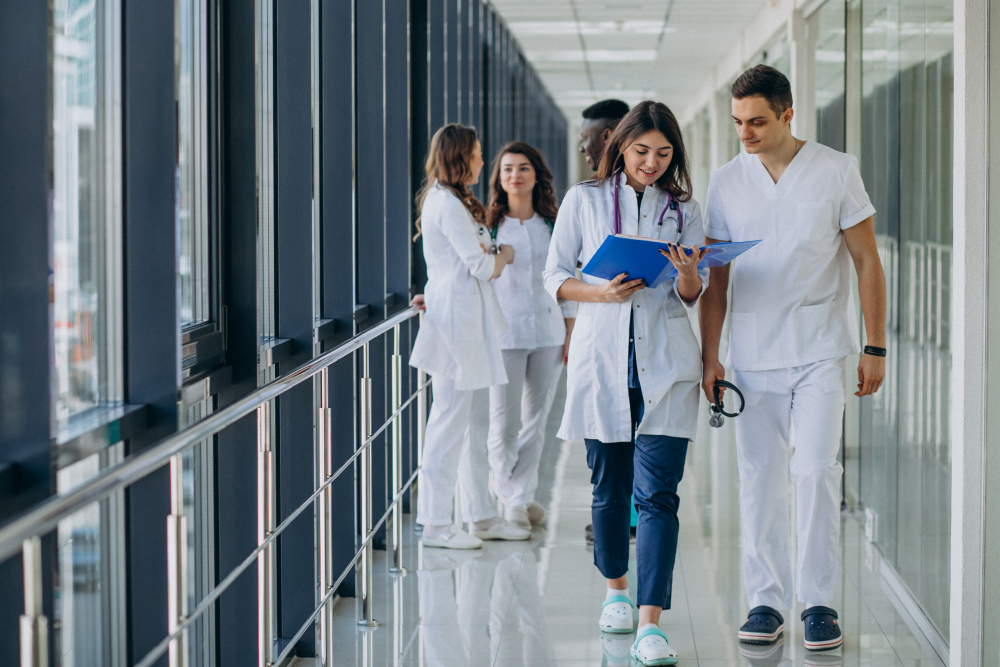
One of the defining strengths of Caribbean medical education, particularly at WUSOM, is its emphasis on practical, hands-on training.
Through clinical rotations, students:
- Work in real-world healthcare settings
- Develop clinical decision-making skills
- Enhance patient interaction and bedside manner
- Apply theoretical knowledge in practical scenarios
This experiential learning ensures that graduates are not only knowledgeable but also clinically competent and confident.
The Whole World Becomes Your Patient Pool
What separates a good physician from a great one? It is rarely the breadth of pharmacological knowledge or the speed of a differential diagnosis. It is the capacity to truly listen, to hear what a patient is communicating, even when culture, language, or lived experience creates distance between them and their doctor.
At WUSOM, students encounter patients, professors, and colleagues from every corner of the globe. Over time, this immersive experience reshapes how they understand health itself. They come to see that a patient’s reluctance to accept a particular treatment may reflect a deeply held cultural belief rather than non-compliance. They learn that pain is described differently across cultures, that preventive medicine is approached with varying levels of trust, and that building rapport requires flexibility rather than just clinical expertise.
This kind of empathy cannot be taught in a lecture hall. Students absorb this knowledge through lived experience during clinical rotations in genuinely diverse healthcare environments, where every interaction challenges and expands their understanding of what it means to care for another human being.
Understanding Global Healthcare Systems
No healthcare system is perfect. Every country has developed its own approach to funding, organizing, and delivering care, shaped by history, economics, culture, and politics. For a medical student educated entirely within one system, the invisible assumptions of that system can be mistaken for universal truths.
Global exposure breaks those assumptions open. When WUSOM students rotate through clinical environments shaped by different models of care, from resource-rich hospitals with advanced diagnostic technology to community health centers serving underserved rural populations, they develop the critical thinking skills to evaluate what works, what doesn’t, and why.
Students begin to ask questions that a student trained in only one context might never think to ask: Why do outcomes differ so dramatically between populations with similar diagnoses? What role does healthcare financing play in patient behavior? How can community trust in medicine be built and sustained?
These are not abstract policy questions. They are the foundations of effective, evidence-informed medical practice in the real world.
A Globally Recognized MD Degree That Opens Doors
WUSOM’s MD program is structured with international medical practice in mind. Graduates are eligible to sit for the United States Medical Licensing Examination (USMLE), the rigorous, internationally respected gateway to medical practice in the United States, which is one of the most competitive and sought-after medical job markets in the world.
An MD degree from the best Caribbean medical school, combined with the kind of global clinical exposure that WUSOM builds into its program, produces a graduate profile that stands out in highly competitive application pools for residency positions, international internships, research programs, and postgraduate studies. The networks students build during their time at WUSOM with faculty who are globally active researchers, with peers from dozens of countries, become professional relationships that can shape an entire career.
In medicine, who you know and how broadly you think are as important as what you know. WUSOM’s global approach ensures graduates arrive at every career milestone with all three.
Becoming the Physician the World Needs
The transformation that happens during a globally immersive medical education is not only professional. Students who study abroad manage their own finances, solve unexpected problems independently, adapt to new climates and food and social norms, and build new friendships across language barriers. These are not peripheral skills; they are exactly the qualities that make a physician effective and resilient over a long career in a demanding profession.
The student who arrives at WUSOM nervous and uncertain, far from home and familiar comforts, is not the same person who completes their clinical rotations. By that point, they have become someone who knows through direct experience that they can handle the unexpected, adapt to any context, and connect with any patient. That confidence, earned rather than performed, is perhaps the most important thing a medical education can provide.
What WUSOM Students Gain from Global Exposure
- Heightened sensitivity to social, intercultural, and ethical differences equips physicians to treat patients with genuine respect for their backgrounds and beliefs.
- Deep knowledge of how healthcare delivery systems differ, from funding models and infrastructure to patient access and health outcomes.
- A nuanced understanding of global public health challenges, including pandemics, infectious diseases, malnutrition, and health equity, and how international collaboration addresses them.
- Exposure to global biomedical research and the international networks that drive it are essential for physicians who want to contribute to knowledge, not just apply it.
- Leadership and collaboration competencies that make graduates effective partners in multidisciplinary, cross-border healthcare teams.
- Independence, adaptability, resilience, and emotional intelligence are the personal qualities that define physicians who thrive in any environment.
Begin Your Global Medical Journey at WUSOM!
Windsor University School of Medicine prepares physicians who are clinically excellent, culturally fluent, and globally minded. If you are ready to train for a career without borders, WUSOM is where that journey begins. Apply now!