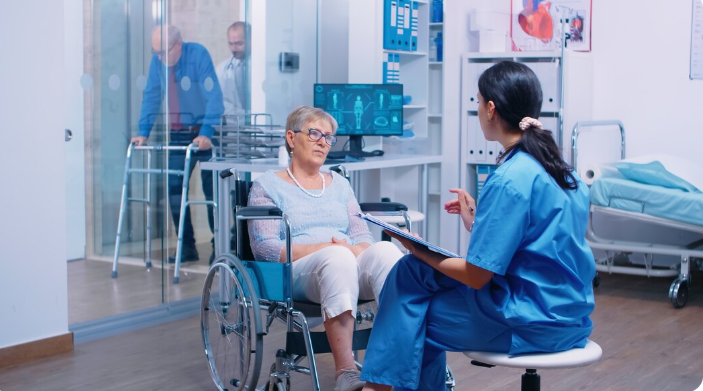
Medicine is not only about memorizing medical terminology and biochemical interactions of drugs; it is about applying this knowledge to make a real difference in people’s lives. Medical students who learn how to deliver patient-centered care become physicians who treat the whole person, not just the health condition.
Patient-centered care is an advanced healthcare approach that solely focuses on the patient’s specific needs, values, and preferences. Rather than focusing on diagnosing and treating diseases, this healthcare model emphasizes treating the whole person, physically, emotionally, and socially.
At its core, patient-centered care is delivering a personalized, effective healthcare plan that prioritizes each patient’s preferences, needs, and values. This approach ensures that those values guide every clinical decision.
At Windsor University School of Medicine, we believe the future of healthcare belongs to physicians who see the whole person, not just the condition. Patient-centered care is not simply a model; it is the moral compass that guides every clinical decision our students are trained to make.
Let’s understand patient-centered care in detail, its importance, principles, and how WUSOM integrates this modern healthcare approach into medical education.
Understanding Patient-Centered Care
Medical education has always demanded intellectual rigor, and mastery of biochemistry, pathophysiology, pharmacology, and anatomy forms the bedrock of clinical competence. But memorizing facts and having in-depth medical knowledge are not enough to make you a great physician. What transforms a knowledgeable graduate into a trusted clinician is the ability to communicate, to listen, and to place the patient at the center of every decision.
Patient-centered care is the framework that makes this possible. For medical students, learning it early, alongside the sciences, ensures that the habits of empathy, respect, and collaborative thinking become as reflexive as reading a lab result or interpreting an ECG. When these skills are cultivated from the outset, they carry forward into every clinical encounter for the rest of a physician’s career.
The goal is to make patients active participants in their own care journeys, rather than passive recipients of a one-size-fits-all system. When patients feel heard and respected, they develop stronger trust in their healthcare providers and follow treatment plans more consistently.
This is especially important in chronic illness cases, where patients are more likely to stay actively engaged in long-term self-management. This approach encourages patients to become active participants in their health journey, leading to speedy recovery. It fosters collaboration between patients, families, and healthcare providers to create personalized treatment plans that lead to better results and stronger patient-doctor relationships.
Patient-Centered Care – Why It is Critical for Medical Students
Builds Clinical Confidence
Students who practice patient-centered skills early develop the confidence to handle complex human conversations, not just clinical procedures.
Shapes Lasting Empathy
Empathy is most effectively cultivated before the pressures of residency set in. Pre-clinical training builds habits of compassion that endure throughout a career.
Improves Clinical Judgment
Understanding a patient’s values and social context sharpens diagnostic and treatment decisions, ensuring clinical reasoning accounts for the whole person.
Improves Patient Outcomes
Research consistently shows that patients under the care of physicians who practice patient-centered approaches adhere better to treatment plans and recover more effectively.
Prepares for Interdisciplinary Teams
Modern healthcare relies on collaborative and interprofessional teamwork to manage complex patient needs. Patient-centered skills such as communication, listening, and coordination are the foundation of effective teamwork across specialties.
Reduces Physician Burnout
Physicians who form meaningful connections with their patients report higher professional satisfaction, lower burnout rates, and longer, more fulfilling careers.
Respect & Dignity
Treating every patient with dignity and honoring their values, preferences, and cultural background throughout their care.
Clear Communication
Open and transparent dialogue between providers and patients that enables fully informed decision-making at every stage.
The Principles of Patient-Centered Care
The British healthcare research firm Picker Institute designed some foundational principles that form a framework for all patient-centered care delivery. These principles of patient-centered care create a strong doctor-patient relationship, fostering trust and patient satisfaction. This approach emphasizes compassion, dignity, and respect for patient autonomy.
1. Respect for Patient Values, Preferences, and Needs
Patients are partners in their wellness plans. Providers must forge reciprocal relationships that genuinely reflect each patient’s unique values and worldview.
2. Coordination and Integration of Care
Disjointed care delivery is avoided. Effective communication flows across the full care continuum, ensuring all aspects of a patient’s health are considered together.
3. Clear Information, Education, and Support
Providers create conditions for patients to actively participate in their journey through clear communication about care plans, lab results, and overall health status.
4. Attention to Physical Comfort and Environmental Needs
A safe and comfortable care environment is provided. Pain management and physical comfort are treated as clinical priorities, not afterthoughts.
5. Emotional Support and Alleviation of Fear
The emotional impact of illness is acknowledged. Patients receive sensitivity, genuine empathy, and reassurance throughout their care experience.
6. Involvement of Family and Close Friends
The participation of a patient’s loved ones is welcomed and supported. Families are valued and encouraged to take an active and meaningful role in the care journey.
7. Continuity of Care and Smooth Transitions
Readmission is reduced through seamless handoffs between providers and settings. Patients leave with the confidence and knowledge to care for themselves after discharge.
8. Fast and Reliable Access to Care
Patients access the right services at the right time. Wait times for referrals, treatments, and specialist appointments are minimized as a matter of institutional priority.
The Patient-Centered Skills Every Medical Student Should Develop
At WUSOM, the following competencies are embedded throughout the curriculum, not taught as a single course but woven into every stage of training. Students who master them become physicians who earn patient trust and deliver care that genuinely transforms lives.
- Active listening
- Empathetic communication
- Shared decision-making
- Cultural humility
- Emotional intelligence
- Care coordination
- Health literacy support
- Family engagement
How WUSOM Integrates Patient-Centered Care into Medical Education
Patient-centered care is not a single lesson; it is a set of skills that deepen progressively throughout medical education, from the earliest pre-clinical years through to advanced clinical rotations. Below are five pillars that guide WUSOM’s training of its students in putting these principles into practice.
1. Creating Individualized Wellness Plans
WUSOM students are trained to understand that patient-centered care begins with genuinely individualized treatment planning. Each patient’s wellness journey is shaped by their cultural background, personal values, and socioeconomic context. Students learn to integrate these dimensions into clinical plans. For example, honoring a patient’s cultural preference for natural remedies by exploring safe complementary approaches alongside evidence-based interventions. Patients adhere far more consistently to plans that reflect their lived reality and worldview.
2. Encouraging Collaborative Decision-Making
At WUSOM, shared decision-making is central to clinical training. Students are taught to engage patients as true partners in their care, inviting questions, presenting options clearly, and building health literacy so patients can make genuinely informed choices. Evidence shows that patients who feel listened to and respected are significantly more likely to trust their physician’s recommendations, adhere to wellness plans, and take proactive steps in managing their health.
3. Building Relationships Through Compassionate Communication
Active, compassionate listening is a skill, and WUSOM treats it as one. Students invest in understanding patients’ family dynamics, fears, and personal histories. Knowing which family members to include in care conversations, or understanding a patient’s history of medical trauma, allows medical graduates to tailor their approach in ways that reduce anxiety and build lasting therapeutic relationships built on trust. Having this knowledge directly improves the quality of care.
4. Providing Meaningful Emotional Support
WUSOM prepares students to recognize the profound emotional weight that illness places on patients and families. Several studies have demonstrated a strong connection between emotional support and improved clinical outcomes. Students are trained to compassionately address fears, whether about financial consequences, the impact of illness on relationships, or anxiety surrounding treatment. Students will also learn how to identify at-risk patients such as elderly individuals with chronic conditions who face social isolation, an overlooked driver of worsening health.
5. Facilitating Coordination and Information Sharing
Patients with multiple chronic conditions frequently navigate multiple providers across several healthcare organizations. Poor coordination can lead to overprescription, duplicate testing, and unnecessary hospitalizations. WUSOM trains students to prioritize care coordination, ensuring clinical information flows fully and promptly to both patients and their families. No patient should feel confused about their health status or fear that information is being withheld from them.
WUSOM’s Commitment to Producing Compassionate Physicians
Patient-centered care is not a checkbox or a clinical module; it is a philosophy that, when genuinely practiced, transforms the healthcare experience for both patients and providers. At Windsor University School of Medicine, this philosophy is woven into every aspect of medical education.
Our MD graduates leave not only with the scientific knowledge and technical skills required of excellent physicians but also with the interpersonal depth, cultural awareness, and ethical grounding to see each patient as an individual worthy of care that is personal, dignified, and whole. In a healthcare landscape strained by complexity and time pressures, WUSOM physicians are trained to be steady and compassionate. WUSOM MD graduates are partners in their patients’ most challenging journeys and advocates for a more humane healthcare system.
Learn how Windsor University School of Medicine is shaping the next generation of compassionate, patient-centered physicians. Begin your journey at WUSOM.