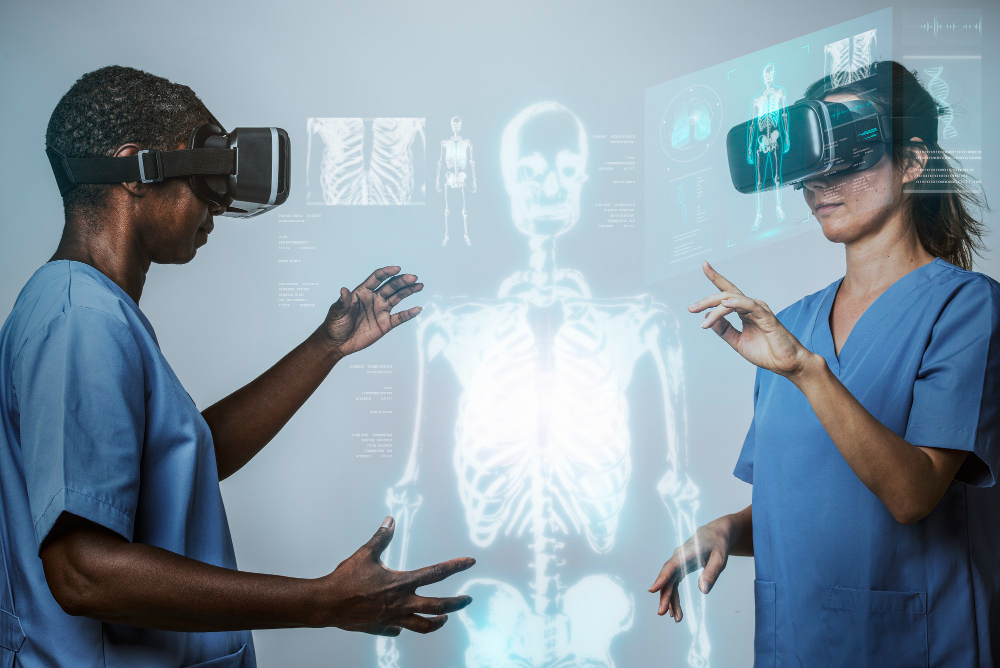
From AI-driven diagnostics to remote patient monitoring, healthcare is evolving faster than ever. Here’s how WUSOM ensures its students don’t just keep pace; they lead.
The landscape of modern medicine is evolving at an unprecedented pace. Rapid technological advancements, combined with a deeper understanding of human biology and patient behavior, are transforming how healthcare is delivered, experienced, and improved. For medical students, staying informed about healthcare trends is no longer optional; it is essential.
At Windsor University School of Medicine (WUSOM), the focus extends beyond traditional medical education. WUSOM, the best Caribbean medical school, is committed to preparing students for a future where medicine is proactive, personalized, predictive, and precise.
Healthcare technology is no longer a separate department within medicine; it is the backbone of modern clinical practice. Below are the latest healthcare trends shaping the medical field and how WUSOM prepares students to understand and apply each of them.
7 Emerging Healthcare Trends to Watch
-
AI & Machine Learning
AI & machine learning are moving from narrow tools to general clinical intelligence. Large language models now draft clinical notes, answer patient messages, and flag coding errors, reducing physician burnout. In radiology and pathology, AI second-reads are becoming the standard of care.
AI models now match or surpass radiologists in detecting cancers, retinal disease, and cardiac abnormalities. Foundation models trained on millions of EHRs power real-time sepsis alerts, readmission prediction, and autonomous triage. In drug discovery, generative AI is compressing molecule-to-trial timelines from the traditional 10-12 years to under 4 years.
-
Personalized & Precision Medicine
Personalized and precision medicine represent a fundamental shift from traditional one-size-fits-all healthcare toward treatments tailored to each individual’s unique biological makeup, environment, and lifestyle. This approach has been made possible largely by the dramatic decline in genome sequencing costs and by major advances in bioinformatics, which enable vast amounts of genetic and clinical data to be analyzed quickly and accurately.
As a result, clinicians can now identify specific genetic variations, biomarkers, and molecular signatures that influence disease development and patient response to different treatments. This enables more precise diagnoses, targeted therapies, and better overall outcomes while minimizing unnecessary side effects.
-
Telehealth and Remote Care
Dramatically expanded since 2020 due to the COVID-19 pandemic, telehealth now makes care accessible to millions, while remote patient monitoring enables real-time clinical engagement. The current focus is on longitudinal relationship continuity, hybrid care models, and equitable access in low-connectivity regions through asynchronous, store-and-forward solutions. Mental health telehealth has seen especially high sustained uptake.
Telehealth has matured beyond video calls into asynchronous AI-mediated consults, store-and-forward dermatology, and remote patient monitoring (RPM) programs that manage chronic disease from home. Virtual wards, referred to as hospital-level monitoring without hospitalization, are now mainstream across the US, UK, and Australia.
-
Internet of Medical Things (IoMT)
The Internet of Medical Things (IoMT) represents a major evolution in healthcare, moving from occasional, clinic-based measurements to continuous, real-time health monitoring through connected devices. This shift is powered by the integration of smart wearables, biosensors, and connected medical devices. Next-generation wearables now continuously track blood glucose (non-invasively), blood pressure, ECG, SpO₂, and even early infection markers via skin biomarkers.
These next-generation tools are designed to detect subtle abnormalities and provide medically actionable insights. With the addition of artificial intelligence, these systems can analyze patterns in real time and flag early warning signs of conditions such as arrhythmias, infections, or metabolic imbalances before symptoms become severe.
-
Robotics and Advanced Surgery
Robotic surgical systems enhance precision, reduce recovery times, and minimize the margin for human error in complex procedures. Robotic surgical platforms now incorporate real-time AI guidance, haptic feedback, and sub-millimeter tremor correction. Autonomous micro-tasks such as suturing, tissue identification, and bleeding arrest are increasingly delegated to machine control. Nano-robots capable of targeted drug delivery within the bloodstream are entering early clinical trials. Autonomous-assist surgery & nano-robotics
-
Blockchain & Health Data Security
Blockchain in healthcare is less about cryptocurrency and more about health data sovereignty. Decentralized record systems that protect patient privacy, enable interoperability, and ensure the integrity of sensitive medical information. Blockchain-anchored EHRs give patients sovereign control over their data, granting, revoking, and auditing access in real time. Federated learning lets hospitals train shared AI models without ever pooling raw patient data, resolving the longstanding privacy-vs-intelligence tradeoff. Zero-knowledge proofs enable consent verification without exposing data.
-
Nutrition-Driven Healthcare
Nutrition is becoming a key pillar of modern healthcare, reflecting a shift toward prevention, personalization, and holistic well-being. Research increasingly links dietary patterns to chronic diseases such as diabetes, cardiovascular conditions, obesity, and certain cancers, encouraging a move from symptom treatment to addressing root causes through targeted nutrition.
Advances in nutritional science now enable personalized dietary plans based on genetics, metabolism, lifestyle, and cultural factors. This allows physicians to use food as medicine to reduce inflammation, improve metabolic health, and prevent disease. As a result, integrating nutrition education into medical training is essential for equipping physicians to provide practical, evidence-based guidance and promote healthier lifestyles.
How WUSOM Keeps Students Updated on Emerging Trends in Modern Medicine
Understanding that technology is advancing rapidly is one thing. Building it into rigorous medical education so that students can translate knowledge into practice is another. Here is how WUSOM does it.
1. Curriculum that Evolves with the Field
At Windsor University School of Medicine, our curriculum is designed to give students both the theoretical grounding and the practical exposure to thrive within this new framework from their very first year. WUSOM’s academic program is regularly updated to reflect advancements in AI, IoMT, precision medicine, and telehealth, ensuring students study current clinical realities.
2. Hands-on Clinical Rotation Exposure
Students rotate through clinical environments where emerging technologies are actively in use, giving them direct, practical experience with the tools they will rely on throughout their careers. At WUSOM, students are introduced to all of these frameworks early in their training because the physicians of tomorrow must be as comfortable discussing a patient’s lifestyle with empathy as they are interpreting a lab result with precision.
3. Critical Evaluation Skills
WUSOM teaches students not just how technologies work but how to critically assess whether a new innovation genuinely improves patient outcomes. It is an increasingly vital clinical skill in an era of rapid adoption.
4. Global Perspective on Digital Health
International exposure through WUSOM’s globally oriented program allows students to see how different healthcare systems are integrating technology, providing a broader, more nuanced view of what effective digital health looks like in practice.
5. Research and Biomedical Innovation Access
WUSOM connects students with global biomedical research communities, equipping those interested in advancing medical technology with the networks and foundational knowledge to contribute to the next wave of innovation.
The physicians who will lead this transformation understand both the human dimensions of care and the technological tools that support it. They will be clinicians who can sit with a patient in a moment of vulnerability and also interpret the data stream from that patient’s wearable with confidence and clarity.
That is exactly the kind of physician WUSOM is committed to producing: technically fluent, clinically excellent, and fundamentally human in their approach to every patient encounter.
Train for the Medicine of Tomorrow
Windsor University School of Medicine prepares graduates who are ready for a healthcare landscape shaped by innovation, data, and a relentless focus on the patient. Explore the WUSOM MD program and apply now.