We live in an era of breathtaking medical progress. Artificial intelligence can read a chest X-ray in milliseconds. Genetic sequencing can predict disease risk before any symptoms appear. Laboratory panels offer windows into our biochemistry that would have seemed miraculous a generation ago. And yet, despite all of this, something fundamental is slipping away: the physician’s ability to examine the patient in front of them with trained, confident, and compassionate hands.
The physical examination is a sophisticated clinical tool that contributes irreplaceable diagnostic information while simultaneously serving as a therapeutic act of human connection. Research consistently demonstrates that declining physical exam skills among medical graduates correlate with rising rates of misdiagnosis, delayed treatment, and diminished patient trust. The stakes could not be higher.
At Windsor University School of Medicine, the best Caribbean medical school, this truth is taken seriously. Through a rigorous, multi-layered approach to clinical training, including peer practice, high-fidelity patient simulation, and real-world clinical rotations, WUSOM is producing physicians who can do what no machine can: be fully present with a patient, listen with their stethoscope, feel with their hands, and think with clinical wisdom born of practice.
Five Reasons the Physical Examination Remains Indispensable
In a clinical landscape crowded with advanced technology, it can be tempting to reach for a scan or a lab panel before laying hands on the patient. But this impulse, however understandable, leads medicine astray. Here is why the physical examination remains a cornerstone of excellent care.
1. The Gold Standard for Many Conditions
In diseases such as Parkinson’s, amyotrophic lateral sclerosis, and a broad range of neurological disorders, the physical examination is not supplementary; it is the primary means of diagnosis. No imaging study can replicate an experienced clinician’s observation of a resting tremor or assess the nuanced tone of a patient’s muscle groups.
2. Refines Clinical Probability
Focused, evidence-based physical examination maneuvers allow physicians to meaningfully raise or lower the probability of a diagnosis before ordering a single test, guiding the efficient and targeted use of expensive imaging and lab resources. The exam directs the workup; it does not merely follow it.
3. Discovers the Unexpected
A thorough examination frequently reveals conditions that are asymptomatic or entirely unrelated to a patient’s presenting complaint but that are nonetheless serious and treatable. For instance, an abnormal lymph node discovered during a routine exam for a sore throat can save lives. The physical examination is medicine’s most powerful screening tool.
4. Prevents Diagnostic Error
Poor physical exam skills are a documented threat to patient safety. Missed findings lead to missed diagnoses, delayed treatments, unnecessary morbidity, and preventable deaths. The consequences extend beyond the patient; diagnostic errors are also among the most common sources of medical malpractice claims, with profound professional and institutional consequences.
5. A Therapeutic Ritual of Human Connection
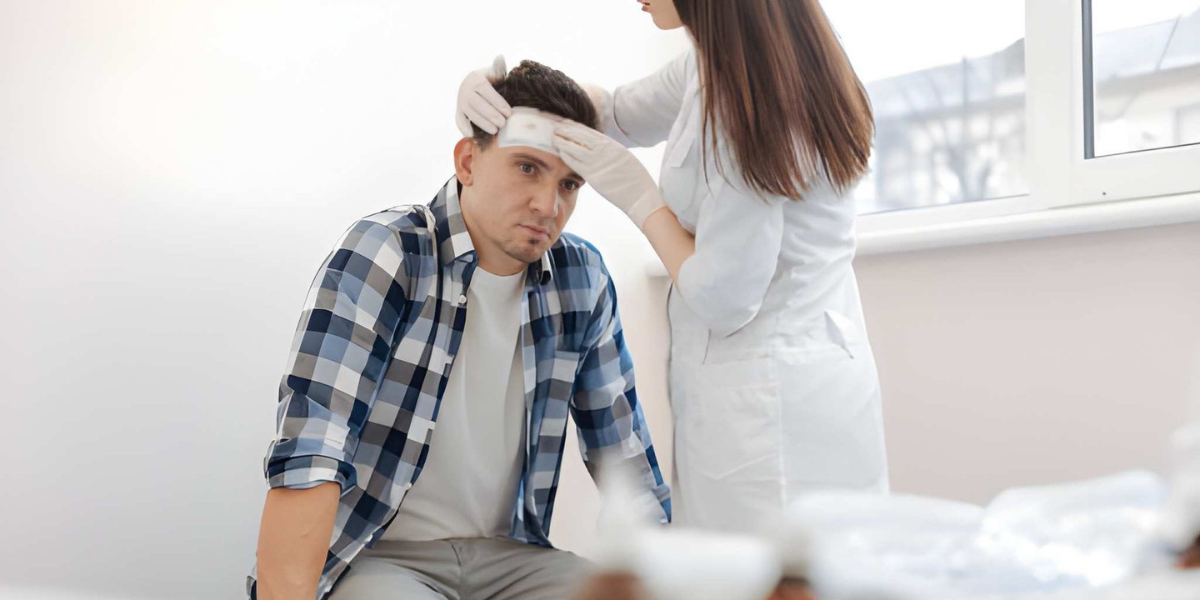
The physical examination is far more than a diagnostic procedure. It is a form of nonverbal communication, an act that shows the patient that they are seen and fully attended to and are truly being noticed. When performed with skill and empathy, it validates the patient’s experience, localizes their suffering, and builds the kind of trust that is, in itself, profoundly healing.
6. Immediately Accessible, Universally Safe, Free
Unlike MRI scanners and genetic panels, the physical examination requires no financial resources beyond basic instruments and a trained clinician. It involves no radiation, no contrast agents, and no invasive procedures. It can be performed anywhere a physician and patient come together, making it, ultimately, medicine’s most democratizing tool.
The Four Pillars of Physical Examination
Mastering the Language of the Body
Every physical examination is built upon four foundational techniques. Together, they form a systematic language through which a skilled clinician reads the body, gathering information invisible to any machine.
Auscultation
Listening to the body’s internal sounds, like heart rhythms, breath patterns, and bowel activity, through a stethoscope, reveals information no scan can replicate in real time.
Inspection
Careful, systematic visual assessment of skin color, posture, symmetry, facial expression, and respiratory effort is the first and most continuously active element of every examination.
Palpation
The art of feeling with fingertips, palms, and hands. To assess organ size, tenderness, texture, and abnormal masses that imaging may not detect or contextualize.
Percussion
Tapping body surfaces to produce diagnostic sounds, differentiating fluid from air and dullness from resonance, and providing a live, portable map of internal structures.
The Physical Examination—A Bridge Between Doctor and Patient
The physical exam is a form of nonverbal communication within doctor-patient relationships that promotes rapport and trust, a privileged human interaction within an age-old tradition of laying on hands. The optimal outcome combines the science and the art of clinical practice, technology, and the physical exam, working together, not one replacing the other.
The physical examination, when performed thoughtfully and skillfully, serves as a profoundly symbolic act. It places the physician in the patient’s physical space, engages their senses, and, without words, communicates an entire philosophy of medicine: that this person, in this body, on this day, matters completely.
Research consistently shows that patients who feel physically attended to report higher satisfaction, demonstrate better adherence to treatment plans, experience reduced anxiety, and have more trusting relationships with their care teams. This is not merely a nicety. It is a measurable clinical outcome.
Technology transforms what physicians can know about a patient’s disease. The physical examination transforms what patients can feel about their physician’s care. Both are necessary. Neither is sufficient alone.
Empathy in Practice
The physical exam is also among the most powerful teaching vehicles in medicine. When a senior physician examines a patient alongside a medical student, they are not just demonstrating technique; they are modeling consideration for the patient’s comfort, demonstrating how to read discomfort or anxiety in a body, and showing how to turn a clinical procedure into a human moment. These lessons cannot be learned from a textbook or a lecture hall.
How WUSOM Prepares Future Physicians
Building Physical Examination Mastery from Day One
Being the best St. Kitts medical school, WUSOM recognizes that physical examination skill is not an innate gift; it is a learned discipline, built through deliberate practice, rigorous feedback, and progressive exposure to real clinical complexity. That is why PE training at Windsor is woven throughout the curriculum, from the earliest basic science courses through the final clinical clerkships.
Windsor’s approach rests on three interconnected pillars that, together, create a learning environment where students develop not just competent but also confident and compassionate examination skills.
1. Peer Practice: Learning Together, Correcting Each Other
From early in their training, Windsor students practice physical examination (PE) techniques with one another in structured, supervised sessions. Peer practice is not merely a warm-up for real clinical experience. It is a high-value learning environment in its own right.
Students take turns as examiner and patient, developing sensitivity to how examinations feel from both sides, identifying each other’s technique errors, building fluency through repetition, and gaining the confidence to perform competently under observation. Peer sessions are facilitated by experienced faculty who provide real-time feedback, ensuring that no errors calcify into habits.
2. Patient Simulation: High Stakes Without High Risk
Windsor’s simulation lab and other facilities provide students with a bridge between classroom learning and genuine patient encounters. Using high-fidelity mannequins equipped with realistic physiological responses, students practice complete physical examinations across a breadth of clinical scenarios.
Simulation allows students to encounter rare or high-accuracy presentations, make mistakes in a safe environment, receive detailed, structured feedback, and develop the systematic habits that will serve them in every patient encounter thereafter. Simulation also allows for deliberate repetition. A student can examine a patient with a heart murmur, receive feedback, and immediately apply corrections in a way that real clinical rotations rarely permit.
3. Clinical Training: The Real World as the Ultimate Classroom
Windsor’s clinical training program places students in a diverse range of hospital and community health settings, giving them exposure to the full spectrum of patients across ages, conditions, acuity levels, and cultural backgrounds. Under the supervision of experienced attending physicians, students conduct complete physical examinations during real clinical encounters, gradually assuming greater independence as their skills develop.
This supervised immersion is where the lessons of peer practice and simulation are tested against reality. The patient who finds palpation painful, the presentation that does not match the textbook, and the murmur that demands careful auscultation to characterize. These experiences sharpen clinical decision-making.
4. Integrated Curriculum: PE as a Thread, Not an Add-On
At Windsor, physical examination is not siloed into a single clinical skills course completed and set aside. It is an ongoing thread woven through every year of training. Students revisit and refine their examination technique as they learn new organ systems in their basic science courses.
They apply PE principles to clinical case discussions. They debrief examination findings in small groups with faculty. This integrated approach ensures that physical examination is not learned and then forgotten but continuously practiced, challenged, and deepened so that by graduation, Windsor students examine patients with the fluency of second nature.
WUSOM: Training Physicians, Not Technicians
Poor physical examination skills are not a minor shortcoming. They are a threat to patient safety, a barrier to accurate diagnosis, and a rupture in the doctor-patient trust that is the bedrock of healing. Conversely, the physician who examines patients with skill, attentiveness, and genuine presence is not just more diagnostically accurate; they are a more complete healer.
Windsor University is committed to training the physicians who bring both the scientific rigor of modern medicine and the irreplaceable human skills of clinical examination to every patient encounter. The physical exam, practiced to mastery, is central to that mission. It ensures that Windsor graduates are not just medically knowledgeable but diagnostically sharp, clinically confident, and genuinely connected to the patients they serve.
Artificial Intelligence and the Physical Exam: Partners, Not Rivals
In an age of AI diagnostics and advanced imaging, the most powerful clinical tool remains a physician’s trained hands, keen eyes, and compassionate presence, and Windsor University is ensuring future doctors never forget it.
As AI tools become integrated into clinical workflows, the physician who understands how to examine a patient becomes more valuable, not less, because they can contextualize what algorithms flag, catch what they miss, and provide the human dimension that no diagnostic tool can replicate.
Artificial intelligence can detect patterns in imaging with remarkable precision, but it cannot assess a patient’s gait as they walk into the room, cannot feel that a liver is enlarged and tender, and cannot hear the subtle crackle in the lung bases that suggests early heart failure. The future of medicine is not a choice between technology and clinical skill. It is the synergy of both: an AI that assists a physician who has mastered the art of examination, producing outcomes that neither could achieve alone.
Windsor University is preparing students for precisely this future. Students learn to use technology as a powerful complement to, rather than a substitute for, their clinical capabilities. They graduate understanding that the physical examination is not the past of medicine. It is the permanent foundation.
Conclusion
Medicine is a bond between patient and healer, made real through the physical exam where science meets humanity. Windsor University School of Medicine understands this deeply. By making mastery of physical examination a genuine priority through peer practice, simulation, and clinical immersion, Windsor is ensuring that its graduates carry into their careers not just medical knowledge, but the irreplaceable clinical art that distinguishes good physicians from great ones.
In a world increasingly mediated by screens and algorithms, the physician who lays healing hands on a patient remains, and will always remain, the heart of medicine. WUSOM empowers future physicians through excellence in clinical training, simulation, and patient-centered care. Start your journey now, join WUSOM, and shape the future of medicine.