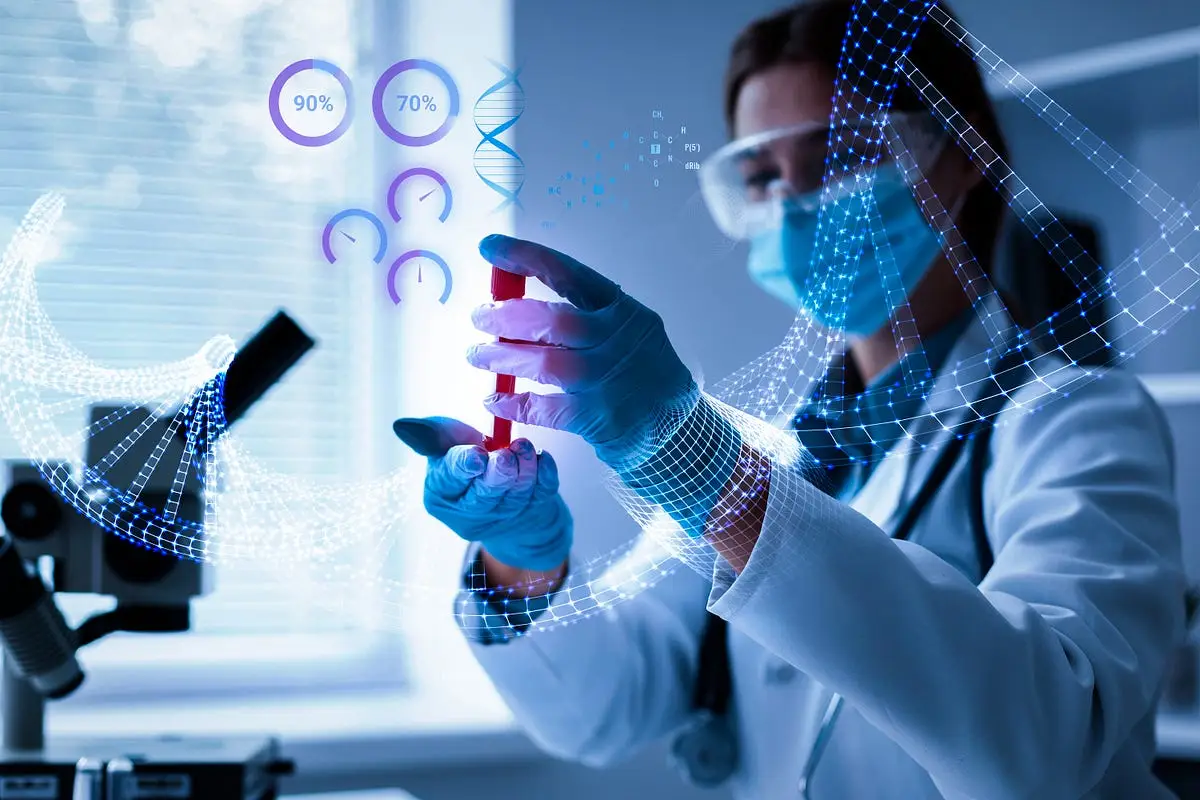
Before a physician steps into a real-world clinical setting, they develop a deeper understanding of what’s actually going wrong at the molecular level. That understanding starts with two important subjects: biochemistry and genetics. Here’s why biochemistry and genetics carry so much weight in how physicians actually diagnose disease.
Biochemistry helps explain the chemical processes that keep the human body functioning, while genetics helps physicians understand how changes in DNA can influence proteins, cells, and ultimately health. Together, these disciplines give future physicians a framework for connecting all the dots, understanding what is happening inside the body with the signs and symptoms seen in a patient.
For medical students, mastering these subjects is not simply about memorizing metabolic pathways or genetic terminology. It is about learning how a change in an enzyme, a disrupted metabolic pathway, or a genetic mutation can alter normal physiological processes. This understanding can also help you understand a series of effects that eventually cause disease.
At Windsor University School of Medicine (WUSOM), foundational sciences such as biochemistry and genetics are an important part of developing this understanding. By connecting basic science concepts with disease mechanisms and clinical reasoning, students can begin to see how information from the laboratory and the patient’s clinical presentation fit together.
What Is Biochemistry?
Biochemistry combines the study of biology and chemistry. In simple terms, it examines the chemical processes that occur within living organisms. For medical students, this means understanding what happens at the molecular level to keep the human body functioning normally.
Biochemistry covers areas such as
- Proteins, carbohydrates, lipids, and nucleic acids
- Enzyme structure and activity
- Metabolic pathways
- Energy production
- Cellular signaling
- Hormonal processes
- Vitamins and mineral metabolism
- DNA and RNA
- Homeostasis
If you are thinking that these concepts don’t work at all in the clinical settings, think again. In reality, they are closely connected to everyday clinical medicine.
Understanding the Importance of Biochemistry in Medical Education
Medical students need to understand how and why a disease develops and its associated symptoms. This is where biochemistry works as a foundational science in medical education. It helps students understand normal physiological processes and recognize what happens when normal biochemical processes are disrupted.
Let’s take an example of the body’s natural metabolism. The body relies on interconnected chemical reactions to produce energy, build molecules, remove waste, and maintain internal balance. If an enzyme does not function properly, a metabolic pathway can be interrupted. The resulting imbalance may contribute to disease. This way of understanding helps medical students move beyond memorization.
What Is Genetics?
Genetics works as an instruction manual. The DNA sequence itself looks for typos, deletions, or rearrangements that could explain a disorder. It helps explain how a single DNA mutation can alter protein structure, why some conditions, such as cystic fibrosis, can be traced back to a specific gene, and how screening can identify inherited health risks before symptoms ever appear.
What Role Does Genetics Play in Disease Diagnosis?
If biochemistry helps us understand what is happening chemically inside the body, genetics can help explain why certain biological changes occur in the first place.
Genes contain instructions involved in producing proteins and regulating biological processes. Changes in DNA can affect the structure or function of proteins, potentially contributing to inherited disorders and other diseases. Genetic testing can examine DNA directly to identify certain mutations, insertions, deletions, or other genetic changes. Cytogenetic testing can identify larger chromosomal abnormalities. This information can be especially important when physicians are evaluating inherited conditions, rare diseases, or certain cancers.
A minor genetic change may affect a protein structure. That protein may alter an enzyme or cellular pathway. The biochemical change may then affect tissues or organs and eventually produce recognizable clinical symptoms. That is where the connection between genetics and biochemistry becomes particularly powerful.
How Genetics and Biochemistry Work Together
The clearest way to see biochemistry and genetics working together is to follow a single condition from cause to diagnosis.
Think of DNA as an instruction manual and biochemistry as helping explain what happens when those instructions are put into action. A genetic mutation can alter the structure or function of a protein. If that protein is an enzyme, the mutation may interfere with a metabolic pathway. The resulting accumulation or deficiency of certain molecules can then contribute to disease. Biochemical genetics is the foundation of precision medicine, combining DNA sequencing with metabolite testing to build a far more complete diagnostic picture.
Three Categories of Diagnostic Testing
| Testing Type | What It Examines | Example Use |
| Biochemical Testing | Proteins, enzyme activity, and metabolite levels in blood or urine | Newborn screening for PKU via tandem mass spectrometry |
| Molecular Genetic Testing | Direct DNA sequences — point mutations, insertions, deletions | Confirming cystic fibrosis or sickle cell anemia via PCR/sequencing |
| Cytogenetic Testing | Whole chromosomes and large structural anomalies | Detecting chromosomal abnormalities from blood or bone marrow samples |
How Biochemical Testing Helps Physicians Diagnose Disease
Not every diagnostic question requires looking directly at a patient’s genes. Sometimes, physicians need to determine what the body is producing, breaking down, or accumulating. Clinical biochemistry can measure proteins, enzymes, metabolites, and other substances in samples such as blood or urine. These measurements can reveal changes in normal physiological processes.
Biochemistry Helps Connect Laboratory Results to the Patient
When a patient arrives with a combination of symptoms and abnormal laboratory findings. A physician starts thinking of several possibilities to make an accurate diagnosis. Biochemistry provides a framework for understanding which metabolic pathways, enzymes, proteins, or regulatory processes could account for those findings.
Being aware of important biochemical concepts helps physicians interpret information from blood and other body fluids and consider possible involvement of metabolic pathways, gene regulation, and chemical messengers. This is where foundational science becomes clinical reasoning.
When students know the series of normal biochemical processes. They can learn how those processes change in disease. Eventually, they will be able to apply that understanding when evaluating real patients.
Integrating Biochemistry and Genetics in the Medical School Curriculum
Biochemistry, genetics, molecular biology, cell biology, physiology, pathology, pharmacology, and other foundational science subjects all are interconnected. By combining both, they help students understand how the healthy body functions and what happens if things work not properly.
A single semester is not enough to master biochemical genetic principles. Medical schools are encouraged to integrate these two subjects throughout all four years of MD curriculum. If introduced early, reinforced from time to time, and applied directly to real clinical cases, it can result in producing competent physicians.
Why This Foundation Matters for Future Physicians
Medicine is moving towards more precision. Genetic testing, molecular diagnostics, biomarkers, and other laboratory technologies are now increasingly important in diagnosing disease. Future physicians need a solid scientific foundation to understand what emerging diagnostic tools are stored for them.
A strong grounding in biochemistry and genetics can help students:
- Understand disease mechanisms
- Interpret biochemical laboratory findings
- Recognize the significance of biomarkers
- Understand inherited and molecular diseases
- Connect genetic changes with biological function
- Develop scientific reasoning skills
- Understand how molecular mechanisms influence treatment
- Diagnose complex clinical problems more systematically
Understanding basic biochemistry and genetics concepts will not make you a laboratory scientist. It gives future physicians the scientific literacy they need to make informed clinical decisions.
How WUSOM Connects Basic Science to Clinical Medicine
At WUSOM, biochemistry and genetics aren’t treated as boxes to check before moving on to real clinical training. They’re built into the medical school curriculum as the scaffolding that clinical training depends on.
- Early, integrated foundational coursework.
Biochemistry and genetics are introduced in the first year along with other coursework, including cell biology, molecular biology, and physiology. This way students see how these disciplines reinforce one another from day one.
- Clinical context from the start.
Core concepts are taught through clinical case discussion. Students understand the biochemistry of a metabolic pathway at the same time when they see things are not working properly for a real patient.
- Reinforcement across all four years.
Concepts introduced in year one resurface in year two with added complexity, and again during clinical rotations, where students apply molecular reasoning directly to the patients they’re treating.
- Active, whole-brain learning strategies.
WUSOM combines lectures with case-based discussion and collaborative problem-solving to help students understand the reasoning they’ll actually use at the bedside. This way, they can weigh possibilities, test hypotheses, and reach an accurate diagnosis.
- A direct line to diagnostic reasoning.
Students don’t just memorize metabolic pathways; they learn how to read a lab panel or a genetic test result the way a practicing physician does. It acts as a piece of evidence that either supports or rules out a working diagnosis.
The goal of this approach is straightforward: by the time WUSOM students reach clinical rotations, they’re not encountering biochemistry and genetics for the first time in a patient’s chart. They’ve already spent years learning to think in exactly those terms.
Understanding how these subjects interact can then help students interpret clinical findings and think more systematically about diagnosis. The goal is not simply to ask students to remember more information. It is to help them understand how the information fits together.
WUSOM Prepares Students for the Diagnostic Challenges of Medicine
Biochemistry and genetics help physicians understand some of the most fundamental pieces of that puzzle. At WUSOM, students develop their medical foundation through the study of basic sciences alongside their broader medical education. Learning how biochemical pathways, genetic information, cellular function, and disease mechanisms connect can help prepare students for the transition from studying medicine to applying it.
Ultimately, the goal is to develop physicians who understand not only what disease looks like but also what is happening beneath the surface. At Windsor University School of Medicine, students have the opportunity to build this scientific foundation as part of their journey toward becoming physicians.
Ready to turn your interest in medical science into a career in medicine? Explore the WUSOM MD program and take the next step toward your future as a physician.
Frequently Asked Questions
Why are biochemistry and genetics taught together rather than separately?
Because disease rarely respects the line between the two. A genetic mutation only matters clinically once you understand its biochemical consequences, and an abnormal lab result only makes sense once you understand the genetic or metabolic pathway behind it. Teaching them together reflects how they’re actually used in diagnosis.
What’s the difference between biochemical testing and molecular genetic testing?
Biochemical testing measures the functional output of the body, proteins, enzymes, and metabolites in blood or urine, using tools like mass spectrometry. Molecular genetic testing looks directly at the DNA sequence itself, using techniques like PCR and sequencing to find specific mutations.
When do WUSOM students begin studying biochemistry and genetics?
These foundational sciences are introduced in the first year of the curriculum, alongside related subjects like cell biology and physiology, and are reinforced with increasing clinical depth through year two and into clinical rotations.
How does this foundational knowledge help students later in clinical rotations?
Students who understand metabolic pathways and genetic mechanisms are better equipped to interpret lab results and genetic test findings in context, rather than treating them as isolated numbers. That’s the reasoning skill that underlies accurate, efficient diagnosis at the bedside.