
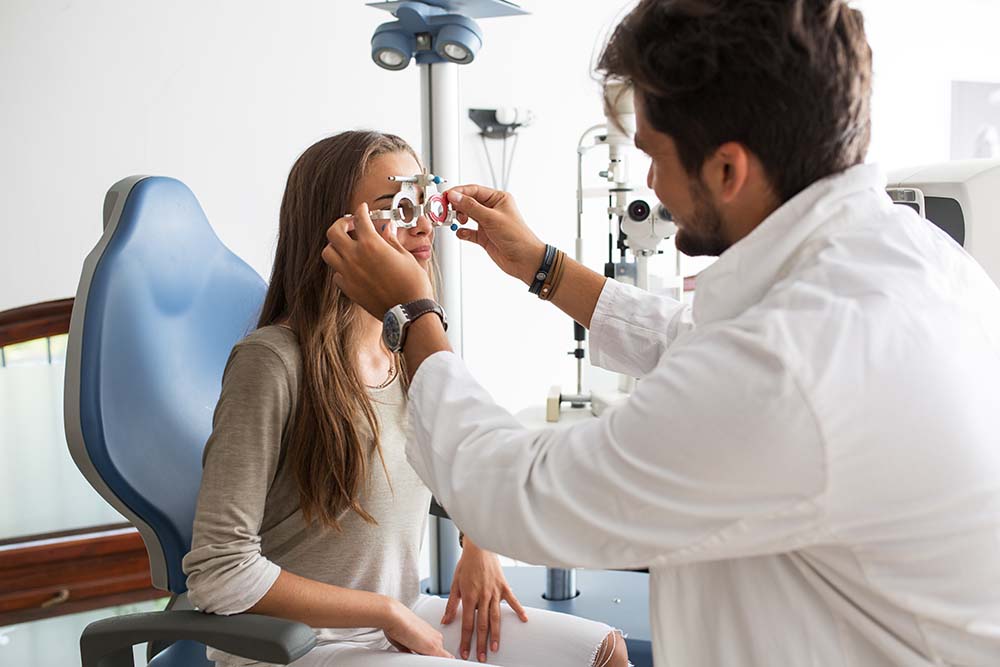
Healthy vision depends on more than seeing clearly. Eye care requires a team of eye care professionals: ophthalmologists, optometrists, and opticians. Everyone contributes to eye care, eyesight, and good health. There are distinct differences in education, clinical training, roles, and scope of practice between the ophthalmologist, optometrist, and optician.
Often times, these positions are used synonymously, but they are actually two different lines of work. An ophthalmologist is a doctor who specializes in eye and vision care, both medically and surgically. An optometrist specializes in primary eye and vision care, while an optician specializes in fitting and dispensing corrective eyewear.
It is important for a person to be aware of these differences, as it can help them decide on their education and career plans. Below is a simple path for pre-med students to understand the various eye care professions and which path to take.
So, What Is an Ophthalmologist?
An ophthalmologist is a licensed medical doctor (MD or DO) that has completed additional training in the diagnosis, treatment, and management of vision-related problems. There are three professions that take care of the eyes, but only one has a medical degree. Ophthalmologists have undergone years of extra surgical and clinical training after medical school.
This is the difference between the three routes of the optometrist, the optician, and ophthalmology. The ophthalmologist is the only doctor who can see, diagnose, and treat the full range of eye disease and can prescribe medications, unlike an optometrist, and can perform eye surgery, including the laser surgeries, corneal surgeries, and oculoplastic or orbital surgeries.
They can have the following responsibilities:
- Giving thorough eye checks to patients
- Diagnosing eye diseases and disorders
- Prescribing medications
- The fitting and prescription of corrective lenses
- Ongoing and complicated eye care for chronic and complicated eye disease
- Performing eye surgery
- Providing emergency eye care
- Participating in or contributing to ophthalmic research
Many ophthalmologists are trained physicians with subspecialty fellowship training in the fields of retina, glaucoma, cornea, or pediatric ophthalmology. During a routine eye exam, they are ideally positioned to detect signs of a broader health problem, like thyroid disease, autoimmune disorders, and even certain cancers.
Ophthalmologist Education and Training
It takes a lot of commitment to medical education in order to become an ophthalmologist. A common route is
- A four-year degree program, typically including solid courses in biology, chemistry, and physics.
- Graduate from an accredited medical school (MD or DO) with a clinical rotation in each specialty.
- Successfully complete the necessary medical licensing exams in your jurisdiction.
- Complete an ophthalmology residency, which usually involves a few years of intensive hands-on experience with medical and surgical eye care.
The total education and training completed to follow this pathway is about 12 to 14 years.
Depending on the student’s interest, fellowship training offers the opportunity to gain further expertise in such areas as:
- Glaucoma
- Retina
- Cornea
- Pediatric ophthalmology
- Neuro-ophthalmology
- Oculoplastic surgery
Ophthalmologists can specialize in certain eye conditions, treatments, or patient groups through a series of subspecialties.
What Does an Optometrist Do?
Optometrists are the first point of contact for many people when it comes to routine eye care, and they have a Doctor of Optometry (OD) degree. They conduct full eye examinations, check vision, prescribe eyeglasses and contact lenses, and treat many common eye diseases. These experts learn to identify early symptoms of common eye disorders, directly treat some diseases, and, in some areas, prescribe a small selection of medicines.
Optometrists are often the first to detect systemic diseases such as diabetes and high blood pressure as they examine the eyes. They refer patients on to an ophthalmologist or physician when something more serious turns up.
Their responsibilities include:
- Properly conducting eye and vision examinations
- An eye test for refractive errors is performed
- Prescribing glasses and contact lenses Identifying some eye problems
- Treatment of certain eye diseases.
- Offering vision therapy services or low vision services
- Prescribe some medicines as necessary
Optometrists often collaborate with ophthalmologists and other eye-care professionals. They may have different levels of practice across different areas in terms of medication and treatment.
Optometrist Education and Training
The optometry program is different from the medical program that ophthalmologists take. Students follow the below education and training path to become an optometrist:
- Complete a college or undergraduate education, usually including courses in biology, chemistry, or physics.
- Use the Optometry Admission Test (OAT) to become a student in optometry school.
- Attend a four-year Doctor of Optometry (OD) program (including clinical rotations).
Take the necessary licensing tests; some eye doctors choose to attend residency programs to acquire skills in specialties of eye care.
What Is an Optician?
An optician is a trained eye-care expert who is trained to prepare, fit, adjust, and dispense corrective eyewear. These experts ensure you choose frames or lenses that fit properly and comfortably. Opticians can be employed in optical retail outlets or in eye clinics or may be self-employed. Prescriptions from ophthalmologists or optometrists are typically all opticians use.
They could be tasked with:
- Assist patients in choosing the frames that are right for them.
- Applying and correcting lenses for glasses.
- Making and inserting eyeglasses.
- Fit adjustment of frames for comfort and fit.
- Fitting certain types of contact lenses
- Describing how to properly maintain eyeglasses and contact lenses.
- Repairing and maintaining glasses
- Referring patients to an optometrist or ophthalmologist when medical evaluation is required.
Opticians do not perform eye examinations or diagnose disease or prescribe for vision correction. They can’t diagnose, but they can fit and explain the care of lenses.
Optician Education and Training
The training needed to get into an optician position is typically shorter than that for an ophthalmologist or optometrist. Which is what makes it great to be an optician! There are steps you must take to become an optician:
- Earn a high school diploma or GED and excellent grades in math and science.
- Opticianry programs may be one to three years in length and cover optics, anatomy, and physiology.
- Take and pass the licensing exam and apply for a license in your jurisdiction (exam requirements differ by jurisdiction).
Ophthalmologist vs. Optometrist vs. Optician: Key Differences
While these eye professionals share an interest in eye health and vision, their roles are distinct.
| Role | Primary Focus | Education & Training | Diagnosis/Treatment | Surgery |
| Ophthalmologist | Medical and surgical eye care | Medical school + postgraduate ophthalmology training | Yes, broad scope | Yes |
| Optometrist | Primary eye and vision care | Optometry degree + clinical training | Yes, within the applicable scope | No |
| Optician | Eyewear fitting and dispensing | Opticianry education/training | No | No |
The most important difference between the three is that ophthalmologists are medical doctors; prospective medical students must know this. They have medical and surgical skills to treat a wide variety of eye disorders and to conduct complicated eye surgery. Optometrists are engaged in primary eye care and vision services, whereas opticians are more concerned with the technical and practical aspects of corrective eyewear.
Important Skills That Matter Across All Three Careers
Regardless of the pathway you choose, successful eye-care professionals need more than technical knowledge. For future physicians, these skills become particularly important because ophthalmology combines detailed clinical examination with complex decision-making and, in many cases, delicate surgical procedures.
- Strong attention to detail
- Manual dexterity
- Strong visual acuity
- Interpersonal skills
- Communication, listening, interpersonal skills
- Critical thinking
Career Paths in Eye Care
Each profession offers different opportunities for professional growth.
Career Opportunities for Ophthalmologists
Ophthalmology offers numerous potential career directions. After completing specialized training, physicians may do general ophthalmology or pursue fellowship training in a subspecialty.
Ophthalmologists can work in different career settings, including
- Hospitals
- Outpatient clinics
- Community clinics
- Private practices
- Academic medical centers
- Research institutions
Other possible career paths for ophthalmologists include becoming an educator, clinical researcher, department leader, or subspecialist.
Career Opportunities for Optometrists
Optometrists have a wide variety of opportunities for career advancement. They have the option to work in community practice, hospitals, research, or other clinical environments. Others specialize in fields like glaucoma, cataracts, or research and academic positions related to eye-related diseases. Optometrists also have opportunities for leadership and consulting and teaching positions with further education and experience.
Career Opportunities for Opticians
Opticians frequently work in optical practices, eye care clinics, and retail optical settings. There are specializations you can pursue, like contact lens fitting, or operate an online optic shop, with more training.
Ophthalmologist vs. Optometrist vs. Optician—What is the Right Path?
Patient outcomes are affected by opticians, optometrists, and ophthalmologists. For students interested in becoming physicians and specializing in ophthalmology, the field of ophthalmology seems like an exciting option.
For those who are interested in clinical examination, visual science, and microsurgical procedures, it is the best medical specialty for you to choose. For those in the early stages of their medical studies who are thinking of going into this line of work, it is important for them to make the first step in choosing a medical school that will equip them with a solid base in the basic and clinical sciences.
Start Your Path Toward a Career in Ophthalmology
For those looking to become an ophthalmologist, it all starts with a solid medical education. Students in the MD pathway at Windsor University School of Medicine (WUSOM) build their medical knowledge in the foundational sciences and the clinical education. This program aims to assist future doctors’ transition from learning concepts in medical basics to using them in a clinical setting. As a premedical student, you may have a goal of becoming an ophthalmologist or a physician in another field of medicine, but your medical education will be the foundation for your future career.
Learn about WUSOM admissions and available entry points, and begin planning your journey toward a career in medicine.
Frequently Asked Questions
- What is the main difference between an ophthalmologist, optometrist, and optician?
An ophthalmologist is a medical doctor who diagnoses and treats eye diseases and performs eye surgery. An optometrist provides primary eye and vision care, including eye examinations and treatment of certain conditions. An optician focuses on fitting, adjusting, and dispensing prescription eyewear. - Which eye-care professional is a medical doctor?
An ophthalmologist is an MD or DO who completes medical school followed by specialized ophthalmology residency training. Optometrists earn a Doctor of Optometry (OD) degree, while opticians complete opticianry education and training rather than medical school. - How long does it take to become an ophthalmologist?
The pathway typically includes a four-year undergraduate degree, four years of medical school, and ophthalmology residency training. Additional fellowship training can be pursued in areas such as retina, glaucoma, cornea, or pediatric ophthalmology. - Do ophthalmologists perform surgery?
Yes. Ophthalmologists receive specialized surgical training and can perform procedures involving the eyes and surrounding structures, depending on their training and subspecialty. - Which career is best for someone interested in eye surgery?
If you want to become a physician who performs eye surgery, ophthalmology is the appropriate career path. It requires completing medical school and specialized postgraduate training in ophthalmology. - How can WUSOM prepare students interested in ophthalmology?
WUSOM provides the foundational knowledge in anatomy, physiology, pathology, pharmacology, and other biomedical sciences that students build on during clinical rotations and specialty training. Exposure to different clinical disciplines can also help students identify areas of medicine they may want to pursue.