
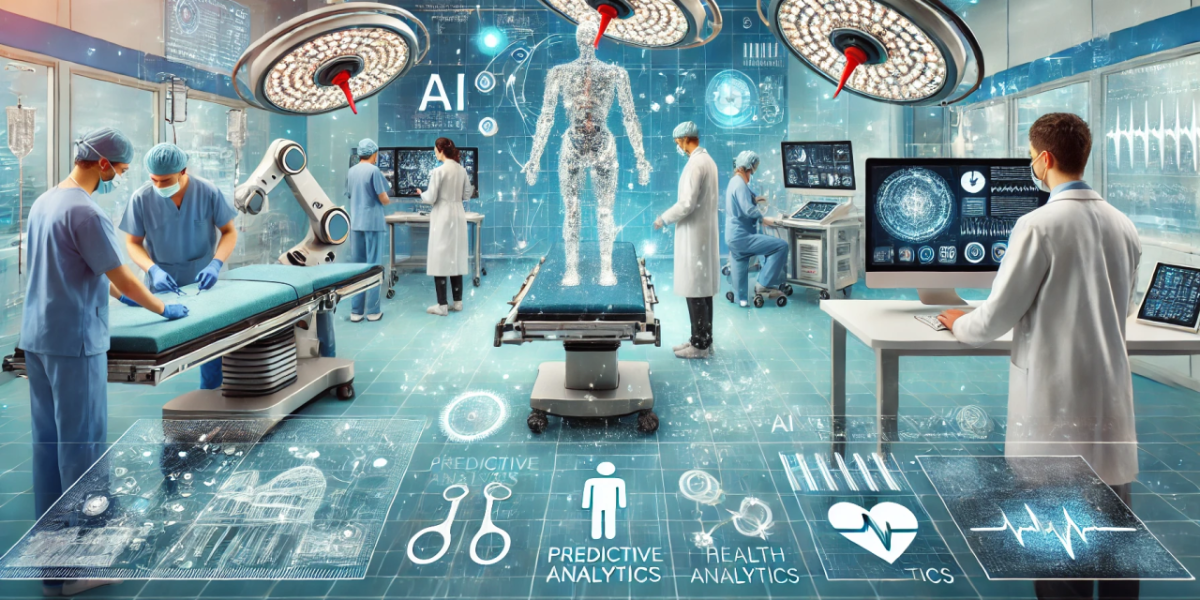
Artificial Intelligence (AI) is driving transformative changes and quickly evolving from an emerging technology into a fundamental pillar of medical education. It is actively shaping the way medical students are trained and prepared for the demands of modern healthcare. AI is being increasingly recognized as essential for preparing students to practice effectively in a technologically advanced healthcare environment.
At Windsor University School of Medicine (WUSOM), AI is becoming an integral component of medical education, enhancing learning, improving clinical readiness, and preparing students for a rapidly evolving healthcare landscape. Let’s discuss the importance of AI in medical education, its applications, and how WUSOM is leveraging AI technology to create an advanced, hands-on learning environment.
The Role of AI in Modern Medical Education
AI encompasses a range of technologies, including machine learning, deep learning, neural networks, natural language processing (NLP), predictive analytics, data science, and even robotics. AI technology offers a unique opportunity to accelerate learning, provide personalized guidance, and simulate complex clinical scenarios that traditional teaching methods may not fully replicate.
The healthcare sector is becoming highly data-driven and technology-intensive. Physicians encounter AI tools in medical imaging, diagnostics, predictive analytics, workflow automation, and patient communication. AI literacy enables future physicians to evaluate AI outputs critically and integrate them appropriately into patient care decisions.
The adoption of AI education is accelerating rapidly, with most leading medical schools across the United States, Canada, and the Caribbean increasingly integrating AI concepts and applications into their curricula. According to the 2024 Curriculum SCOPE Survey by the Association of American Medical Colleges (AAMC), 77% of responding MD and DO-granting schools in the U.S. and Canada have integrated AI in their curricula.
AI is being integrated throughout required curricula across multiple domains, including:
-
Simulation-based Training:
AI-driven simulations allow students to interact with virtual patients, diagnose conditions, and make clinical decisions in a safe, controlled environment.
-
Personalized Feedback:
Machine learning algorithms can analyze student performance and provide targeted feedback, helping students identify areas for improvement.
-
Predictive Analytics in Learning:
AI can monitor study habits and predict which concepts a student may struggle with, allowing educators to intervene early.
-
Clinical Decision Support Practice:
Students learn to work alongside AI tools that assist in diagnosis, treatment planning, and patient care management, reflecting real-world medical practices.
Benefits of AI in Medical Education
Enhanced Learning Efficiency
AI can tailor educational content to each student’s learning style and pace. For example, if a student struggles with a particular concept, AI-driven platforms can offer additional exercises, interactive visuals, or explanations until mastery is achieved. This individualized approach ensures that all students gain a thorough understanding of core medical topics without being held back by one-size-fits-all teaching methods.
Supporting Educators and Curricula
For faculty, AI streamlines administrative tasks such as grading, providing feedback, and curating resources, freeing time for higher-value teaching and mentorship. As AI usage grows in clinical practice, educators are increasingly tasked with building AI competency into curricula so that graduates are prepared for these technology-augmented clinical environments.
Improved Clinical Preparedness
Simulation-based training powered by AI allows students to practice diagnosing and treating patients in a safe, virtual environment. WUSOM students can encounter rare or complex cases that they might not see during clinical rotations, gaining valuable experience and building confidence. This reduces the risk of errors when caring for real patients and accelerates skill development in a controlled setting.
Data-Driven Feedback
AI systems can analyze student performance on tests, simulations, and assignments, providing precise, actionable feedback. This allows students to identify specific areas of weakness and track improvement over time. At WUSOM, such feedback helps faculty tailor mentorship and support, ensuring students progress effectively throughout the MD program.
Innovation and Research Exposure
AI integration introduces students to emerging technologies and applications in medicine. By engaging with AI tools early, WUSOM students develop skills in data analysis, predictive modeling, and digital health solutions, preparing them for research projects, innovation in clinical practice, and leadership roles in technology-driven healthcare initiatives.
Better Patient Outcomes
AI-trained students are equipped to use predictive analytics, decision-support tools, and other AI-driven technologies in clinical settings. This improves diagnostic accuracy, treatment planning, and patient monitoring. By understanding how to combine AI insights with human judgment, WUSOM graduates can contribute to safer, more effective, and evidence-based patient care.
AI at WUSOM: Enhancing Learning Through Technology
At WUSOM, the integration of AI is central to creating an advanced, hands-on learning environment.
- Simulation-based Patient Care Training:
WUSOM uses AI-enhanced simulations to allow students to practice procedures, manage patient care, and make diagnostic decisions without risk to real patients. This approach reinforces critical thinking, problem-solving, and clinical decision-making skills.
- Interactive Learning Modules
AI-driven platforms help students visualize complex biological processes, understand disease progression, and apply theoretical knowledge to practical scenarios.
- Assessment and Personalized Guidance
AI systems help faculty provide more precise evaluations of student performance, enabling tailored mentoring and support throughout the MD program.
By integrating AI into the curriculum, WUSOM ensures that its students not only master core medical concepts but also gain exposure to cutting-edge technologies shaping the future of healthcare.
Preparing Future Physicians for a Technological Era
AI is not a replacement for human judgment or empathy in medicine. Rather, it is a tool that empowers future physicians to make more informed, efficient, and accurate decisions. WUSOM’s commitment to integrating AI into its medical education prepares students to meet the challenges of a dynamic healthcare system while maintaining the human-centered focus essential to medicine.
By embracing AI in medical education, WUSOM is shaping a generation of physicians who are not only clinically skilled but also technologically proficient, ready to leverage AI to improve patient care and advance medical innovation worldwide.
Take control of your future in medicine, apply to WUSOM, and join an institution at the forefront of AI-driven medical education, preparing you to lead, innovate, and deliver exceptional patient care in a rapidly evolving healthcare landscape.