The journey to becoming a physician begins long before medical school. One of the most effective ways to prepare is by developing a strong academic foundation in biomedical sciences. For aspiring doctors, especially those who have not yet chosen a specialty, this foundation provides the scientific depth and intellectual flexibility needed to succeed in medical school and beyond.
Biomedical sciences introduce students to the core principles that underpin clinical medicine. By exploring advanced biological systems, disease mechanisms, and human physiology, students gain early exposure to the same concepts they will encounter in an MD program. This early preparation not only strengthens academic readiness but also helps students identify their areas of interest within the vast field of medicine.
At Windsor University School of Medicine (WUSOM), the Associate of Biomedical Sciences program is not merely a pre-med pathway; it is an integrated springboard directly into the Doctor of Medicine (MD) program, designed to transform motivated students into fully prepared medical school candidates from day one.
What Is Biomedical Science?
Biomedical science is a multidisciplinary field that applies the principles of biology, chemistry, and technology to understand the human body and the diseases that affect it. It serves as the bridge between basic science and clinical practice, forming the scientific backbone of modern medicine. It equips students with the knowledge, analytical skills, and professional competencies that medical schools demand.
Students who study biomedical science emerge with both breadth and depth: a wide-angle view of human biology combined with specialized knowledge in the disciplines most directly relevant to medical practice.
The Core Disciplines of Biomedical Science
Biomedical science is built on six foundational pillars, each of which contributes directly to clinical medical knowledge and prepares students to think like future physicians. Students learn about a range of interconnected disciplines, including:
- Human anatomy and physiology — understanding the structure and function of the human body
- Biochemistry — exploring the chemical processes that sustain life
- Molecular biology — examining how cellular mechanisms drive health and disease
- Microbiology — studying microorganisms such as bacteria, viruses, and fungi
- Pharmacology — analyzing the mechanism of action of drugs and producing biological effects
- Pathology — investigating the causes and effects of disease
Why Biomedical Sciences Is an Ideal Pre-Med Pathway
Medical school admissions is a rigorous, competitive process. Admissions officers are not simply looking for students with strong grades; they are looking for students who demonstrate scientific mastery, analytical thinking, ethical grounding, and the interpersonal skills required to care for patients. A biomedical science degree is uniquely structured to develop all of these qualities.
Biomedical sciences is widely regarded as one of the most effective pre-med pathways because it aligns closely with the academic and professional demands of the best Caribbean medical school.
A Curriculum Built for Medical School Readiness
The program covers essential pre-med requirements, including biology, chemistry, physics, and biochemistry. This ensures that students enter medical school with a strong command of foundational sciences and the ability to apply them in clinical contexts.
Preparation for the MCAT
The Medical College Admission Test is a critical component of medical school admissions. Biomedical sciences programs emphasize key MCAT subjects, such as biochemistry, genetics, and cellular biology, giving students a clear advantage in exam preparation.
Focus on Human Health
Unlike general science degrees, biomedical sciences place a strong emphasis on human health and disease. This focus helps students understand how the body functions, how diseases develop, and how they are treated.
Hands-On Research and Lab Experience
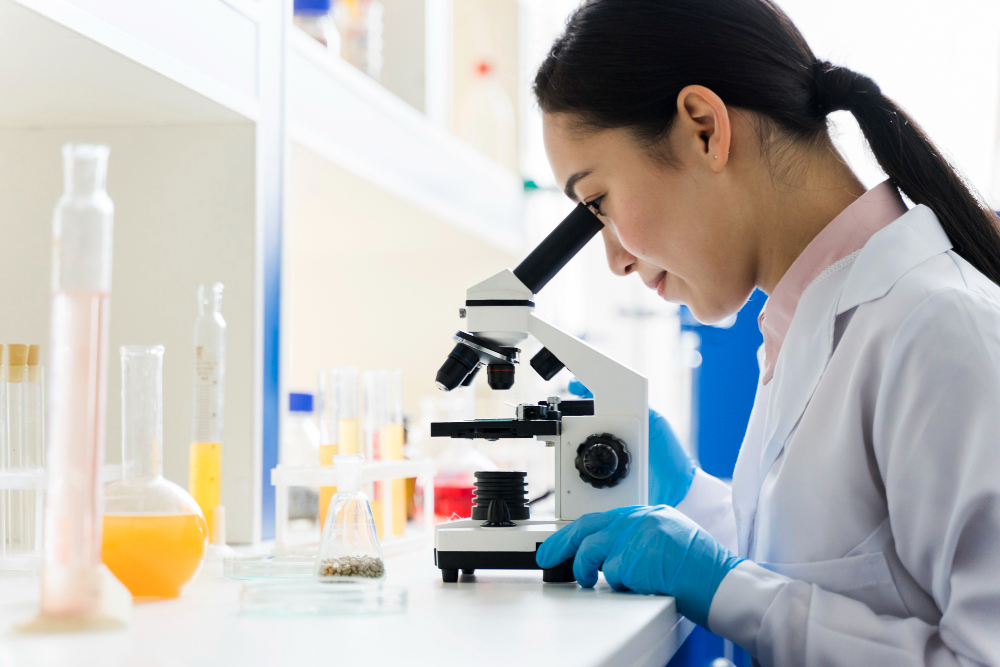
Laboratory work and research projects are central to biomedical sciences education. These experiences enhance technical skills, strengthen analytical thinking, and prepare students for both medical school and future clinical training.
Structured and Purpose-Driven Learning
Rather than navigating pre-med requirements independently, students benefit from a structured academic pathway designed specifically for medical school preparation. This reduces uncertainty and ensures that all critical competencies are developed systematically.
Core Competencies Developed Through Biomedical Sciences
Medical schools are not only looking for strong academic performance, but they also seek candidates with well-developed professional and cognitive skills. Biomedical sciences programs are designed to cultivate these competencies, which form the foundation of a competent and compassionate physician:
- Scientific inquiry and critical thinking: You will learn to analyze data, interpret results, and approach problems methodically.
- Problem-solving and decision-making: Lab work and case-based learning mirror real clinical scenarios.
- Communication and teamwork: Group projects and collaborative research build interpersonal skills essential for patient care.
- Ethical and professional responsibility: Students develop an understanding of medical ethics, patients’ data security, and professional conduct.
- Interdisciplinary understanding: Integration of multiple scientific disciplines reflects the complexity of real-world medicine.
How WUSOM’s Associate of Biomedical Sciences Program Prepares You for Medicine
Windsor University School of Medicine offers the Associate of Biomedical Sciences (ABS) as part of a distinctive integrated pathway into the Doctor of Medicine program. This is not a standalone pre-med degree; it is the first chapter of a continuous, structured journey toward becoming a licensed physician.
At Windsor University School of Medicine (WUSOM), the Associate of Biomedical Sciences program is designed to provide a seamless transition from foundational science education to medical training. The program is designed for students who want clarity about their destination, structure in how they get there, and the academic momentum that comes from being fully immersed in a medically oriented curriculum from the earliest stages of their training.
A Direct Pathway to the MD Program
WUSOM’s program is uniquely structured to integrate biomedical sciences with direct progression into the Doctor of Medicine (MD) program. This eliminates uncertainty and provides students with a clear, goal-oriented academic pathway from the start.
A Rigorous 16-Month Scientific Foundation
The curriculum is carefully designed to build mastery in core biomedical disciplines within a focused timeframe. Students develop a deep understanding of anatomy, physiology, biochemistry, and related fields, ensuring they are academically prepared for the challenges of medical school.
What the 16-Month Curriculum Delivers
- Mastery of core biomedical disciplines: anatomy, physiology, biochemistry, microbiology, and pharmacology.
- Development of critical thinking and analytical reasoning skills specific to clinical problem-solving.
- Introduction to the professional norms, ethical frameworks, and communication skills of medical practice.
- Academic preparation for the intellectual demands of the WUSOM MD program and the USMLE examination series.
- A structured, purpose-driven academic experience free of the guesswork of traditional pre-med planning.
Flexible and Accessible Learning
With both online and on-campus learning options and flexible start dates, WUSOM ensures accessibility for students from diverse backgrounds. This flexibility allows future doctors to start their medical school journey without unnecessary delays.
Strong Academic and Career Support
Experienced faculty and academic advisors play a crucial role in navigating the complex pathway to medical school, offering guidance and support that significantly improve student outcomes, from undergraduate preparation to residency matching. This support system helps students stay aligned with their goals and build competitive profiles for advancement.
Versatile Career Opportunities
While biomedical sciences is an excellent pathway to medicine, it also opens doors to a wide range of health-related careers. Graduates can pursue opportunities in:
- Biomedical research
- Biotechnology and pharmaceuticals
- Public health
- Healthcare administration
- Diagnostics and medical technology
This flexibility ensures that students have multiple career options while remaining aligned with the healthcare field.
Conclusion: A Strategic Start to a Medical Career
Biomedical sciences is more than a pre-med major; it is a strategic foundation for a successful career in medicine. By combining scientific rigor, practical skills, and clinical relevance, it prepares students to meet the demands of medical school with confidence.
Through its structured and forward-thinking Associate of Biomedical Sciences program, Windsor University School of Medicine provides students with a clear, efficient, and academically robust pathway into the MD program. For aspiring physicians, this integrated approach not only simplifies the journey but also strengthens their ability to become skilled, knowledgeable, and compassionate doctors.
Frequently Asked Questions
Do I need to complete the ABS program before entering the MD program at WUSOM?
The pathway integrates the ABS program with seamless progression into the MD program. However, students who have already completed strong pre-medical coursework at other institutions may be eligible to apply directly to the WUSOM MD program. It is recommended to contact WUSOM’s admissions office to determine the admissions criteria and the most suitable pathway.
Is the 16-month curriculum too intensive?
The ABS curriculum is rigorous by design; it reflects the academic demands of medical school itself. WUSOM provides structured academic advising and student support resources to help students succeed within this format. Students who are genuinely committed to medicine and willing to invest in the process consistently find that the program’s intensity prepares them well for the MD curriculum.
What careers can I pursue with an Associate of Biomedical Sciences degree if I decide not to continue into the MD program?
The ABS foundation prepares students for a wide range of health-related careers, including pharmacy, physician assistant programs, physical therapy, optometry, public health, biomedical research, healthcare administration, and biotechnology. The degree program also provides a strong foundation for graduate study in biomedical sciences or related fields.
How does WUSOM support students in preparing for the MCAT?
The ABS curriculum is aligned with MCAT content areas, meaning that students who master the ABS coursework are simultaneously building their MCAT preparation. WUSOM academic advisors can provide guidance on MCAT timing, preparation resources, and the relationship between ABS coursework and MCAT performance.