Ask most medical students what drew them to their first real “aha” moment in medicine, and a surprising number will point to the same place: the musculoskeletal system. It’s visual, it’s tangible, and it’s the first place many students start connecting what a structure looks like to what it actually does for a living, breathing patient.
The musculoskeletal (MSK) system is one of the most important foundations of medical education. Bones, muscles, joints, tendons, ligaments, and associated connective tissues provide the structural framework that enables movement, protects vital organs, and supports everyday physical function.
The MSK system holds such a central place in the early medical school curriculum. It isn’t just a unit on bones and muscles. It’s a training ground for the kind of integrated, patient-centered thinking that carries students through the rest of their education.
At Windsor University School of Medicine (WUSOM), the Musculoskeletal System Module introduces students to the fundamentals of the human musculoskeletal system while connecting foundational science with practical medical skills, professional development, teamwork, and clinical reasoning.
Why Is the Musculoskeletal System Important in Medical Education?
For medical students, understanding this system is not simply about memorizing anatomical structures. It is about learning how structure, function, disease, injury, and patient symptoms are connected. The MSK system provides an excellent opportunity for medical students to understand the relationship between anatomy and clinical function.
Musculoskeletal conditions are also highly relevant to clinical practice. They encompass a broad range of degenerative, inflammatory, autoimmune, traumatic, and other disorders that can affect mobility, independence, quality of life, and overall well-being. The global burden of these conditions makes a strong understanding of musculoskeletal health particularly valuable for future physicians.
MSK education extends beyond memorization. It encourages students to ask clinically relevant questions:
- What is the normal function of this structure?
- What happens when the structure is damaged?
- How could an injury affect movement or function?
- Which clinical signs might indicate a particular condition?
- How can examination findings help narrow a differential diagnosis?
- What additional information or investigation may be required?
Developing this type of thinking helps students begin connecting basic science knowledge with the clinical reasoning they will use throughout their medical careers.
What Do Medical Students Learn About the Musculoskeletal System?
A comprehensive MSK curriculum brings together several foundational areas of medical science. Students learn the structure and function of the system while developing an understanding of how abnormalities can affect patients.
Foundational Anatomy and Histology
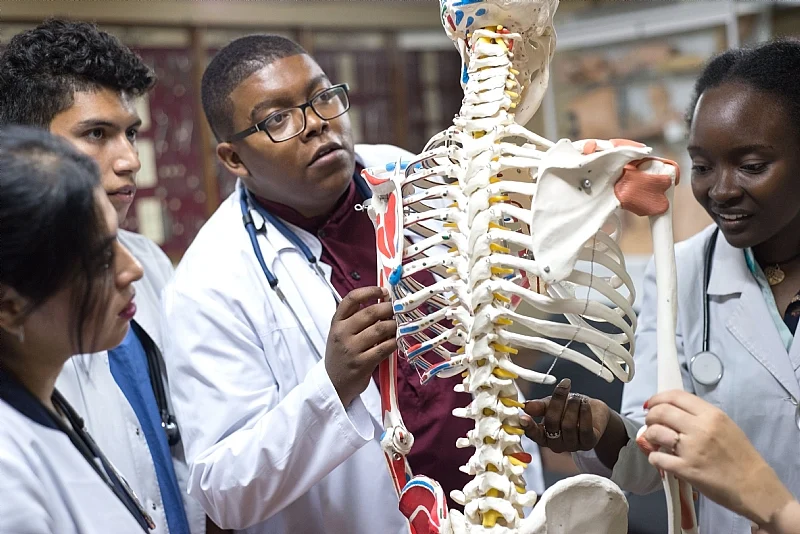
Students study the structural organization of bones, skeletal muscles, joints, tendons, ligaments, and related tissues. Anatomy education may involve laboratory experiences, imaging, and microscopic examination to help students understand both the larger organization and cellular characteristics of musculoskeletal structures.
Cadaveric prosections allow students to understand three-dimensional anatomical relationships. Understanding the spatial relationship between muscles, nerves, blood vessels, joints, and fascial planes can help students recognize why specific injuries or disease processes produce particular clinical findings.
Physiology and Pathophysiology
Students also explore how the musculoskeletal system functions. This includes concepts such as muscle contraction, nerve-muscle interactions, joint biomechanics, and disorders affecting bone and muscle physiology.
Understanding normal function provides an essential foundation for recognizing abnormal function. When students understand how a healthy joint moves or how muscles generate movement, they are better positioned to understand what happens when inflammation, trauma, degeneration, or other pathology interferes with that function.
Clinical Examination Skills
MSK education also introduces students to practical examination techniques. These can include assessing range of motion, evaluating joint stability, identifying areas of tenderness, and using appropriate special examination maneuvers.
These skills are important because many musculoskeletal complaints are initially evaluated through a combination of patient history and physical examination. Learning how to observe movement, assess function, and communicate findings helps students transition from theoretical knowledge toward patient-centered clinical practice.
Medical Imaging
Medical students also benefit from learning how musculoskeletal abnormalities appear on diagnostic imaging. X-rays, CT scans, and MRI can provide important information about fractures, degenerative changes, bone pathology, and soft-tissue injuries.
Developing an introductory understanding of these modalities helps students recognize the connection between anatomy and the clinical information provided by imaging.
How WUSOM Integrates the Musculoskeletal System Into the MD Curriculum
At WUSOM, the MSK module takes an integrated approach to learning. Rather than treating anatomy, physiology, histology, and clinical application as completely separate subjects, the curriculum encourages students to connect these areas as they develop their understanding of the human body.
The module introduces students to the basic principles of the musculoskeletal system while supporting broader educational outcomes, including preventive medicine, communication skills, professionalism, self-management, scholarly development, and practical medical skills. This integrated approach is reinforced through multiple learning experiences.
Case-Based Learning
Clinical cases allow students to apply foundational knowledge to realistic medical scenarios. Rather than simply recalling information, students can work through problems involving trauma, inflammation, pain, functional limitations, or other musculoskeletal presentations. Case-based learning helps students develop the habit of connecting symptoms and clinical findings with underlying anatomy and physiology.
Practical Laboratory Experiences
Hands-on learning gives students opportunities to examine anatomical structures and understand their relationships in three dimensions. These experiences can make complex anatomical concepts more tangible and provide a foundation for future physical examination and clinical skills.
Ultrasound and Living Anatomy
The module also incorporates ultrasound sessions with standardized patients. This provides students with an opportunity to see anatomical structures in a living person and strengthens the connection between what they learn in the laboratory and how anatomy is applied during clinical care.
Small-Group Learning and Collaboration
Small-group discussions and practical sessions also help students develop communication and teamwork skills. Medical practice requires physicians to work effectively with colleagues, communicate clinical observations clearly, and contribute professionally within healthcare teams.
At WUSOM, these professional skills are integrated into the learning experience rather than treated as separate from medical knowledge.
Developing Clinical Reasoning Through MSK Education
One of the most valuable aspects of musculoskeletal education is the opportunity to develop clinical reasoning early in medical school. Students gradually move from identifying structures to understanding their clinical significance.
For example, knowing the anatomy of a joint is only the starting point. A future physician must also understand how injury, inflammation, degeneration, or neurological dysfunction can alter movement and produce symptoms. That shift from memorization to application is an important part of becoming a clinically capable physician.
Preparing Students for Future Medical Careers
A strong foundation in musculoskeletal medicine is valuable regardless of which specialty a medical student ultimately chooses. MSK-related complaints are encountered across numerous areas of medicine, including:
- Primary care: evaluating common joint, muscle, and back complaints
- Emergency medicine: assessing fractures, trauma, dislocations, and acute injuries
- Orthopedics: managing disorders and injuries involving bones, joints, and connective tissues
- Rheumatology: caring for inflammatory, autoimmune, and degenerative conditions
- Neurology: understanding how nerve and muscle disorders affect movement and function
- Rehabilitation medicine: supporting patients recovering from injury, illness, or functional decline
- Sports medicine: addressing activity-related injuries and musculoskeletal conditions
- Geriatrics: managing mobility limitations and conditions that can affect independence
Students who develop a strong understanding of the MSK system can therefore carry this knowledge into many areas of clinical practice. The curriculum helps prepare them not only to recognize physical problems but also to think about how those problems affect a patient’s mobility, independence, daily activities, and quality of life.
Windsor Builds This Foundation from Day One
From the clinical simulation center to ultrasound sessions with standardized patients, Windsor University School of Medicine’s MD curriculum is built to connect basic science with real clinical reasoning early, exactly the kind of preparation that carries students through rotations, residency, and beyond.
At Windsor University School of Medicine, students are introduced to the musculoskeletal system through an approach that connects foundational science with practical learning and clinical thinking. The experience helps establish knowledge and skills that can continue to develop throughout the MD program and into future clinical practice. Apply to WUSOM today!